About
Yuval Oz
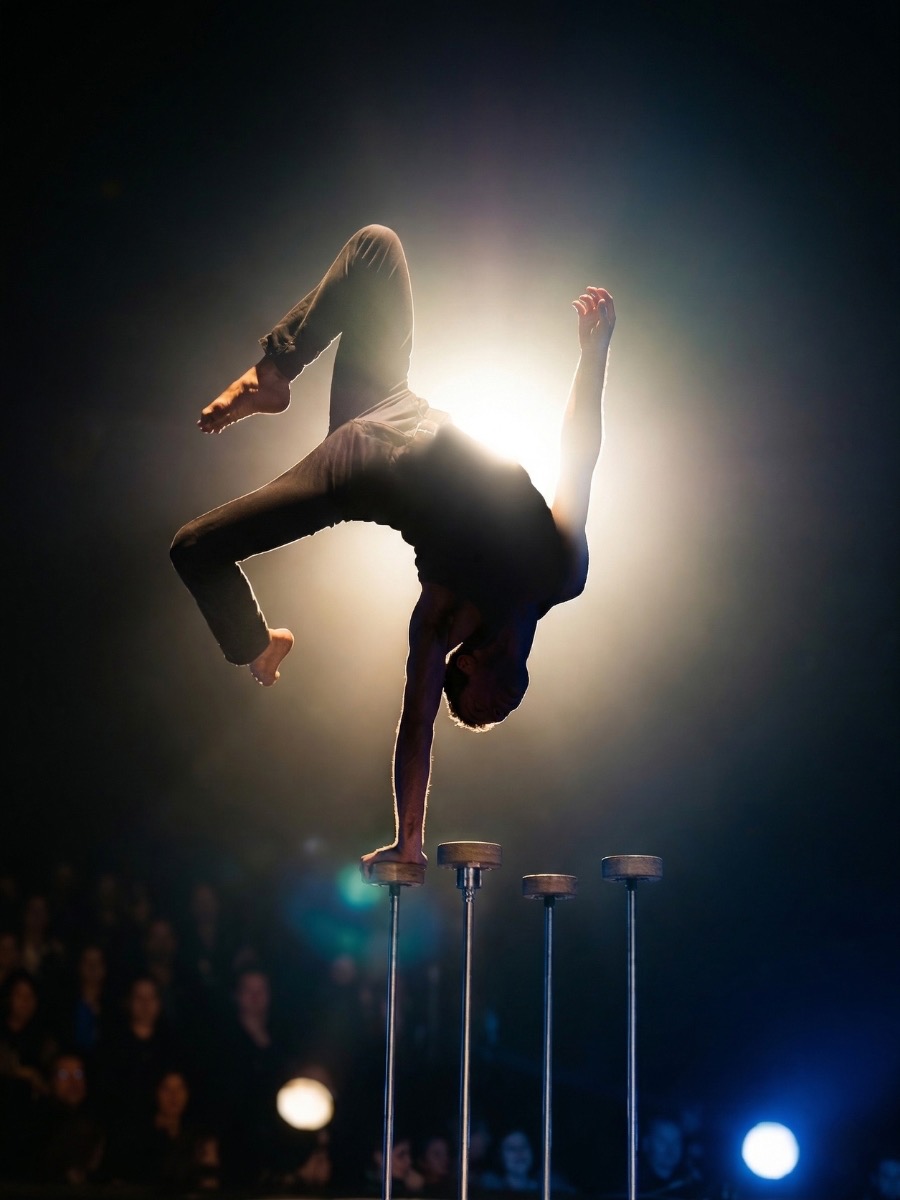
I was seven years old the first time I stood on a professional stage. I didn't know then that I'd spend the rest of my life looking for new ways to perform — but looking back, it makes complete sense.
I'm a circus performer, a professional hand balancer, and a teacher. I've been teaching handstands since 2008 — to hundreds of students across the world, from complete beginners to elite movers. And somewhere along the way I discovered that my love for teaching is no smaller than my love for performing.
This is my story. And probably a little bit of yours too.
Train with meThe long way around
I was always physical.
Always looking for the edge.
Gymnastics from the age of eight — until my parents pulled me out after two years, convinced it would affect my growth. Classical ballet, which my doctor prescribed for a problem with my feet (yes, really). Three years of kung fu in high school. I was always moving, always curious, always playing with what a body could do.
But none of it was the thing. Not yet.
Music came close. I spent years working as a musician — and something about playing, about listening that deeply, stayed with me in ways I didn't fully understand until much later.
It wasn't until I was 21 that I discovered the circus world — and fell completely, helplessly in love with it. Still, I didn't know exactly where I was going. Until one evening, I downloaded a video from eMule.
The moment
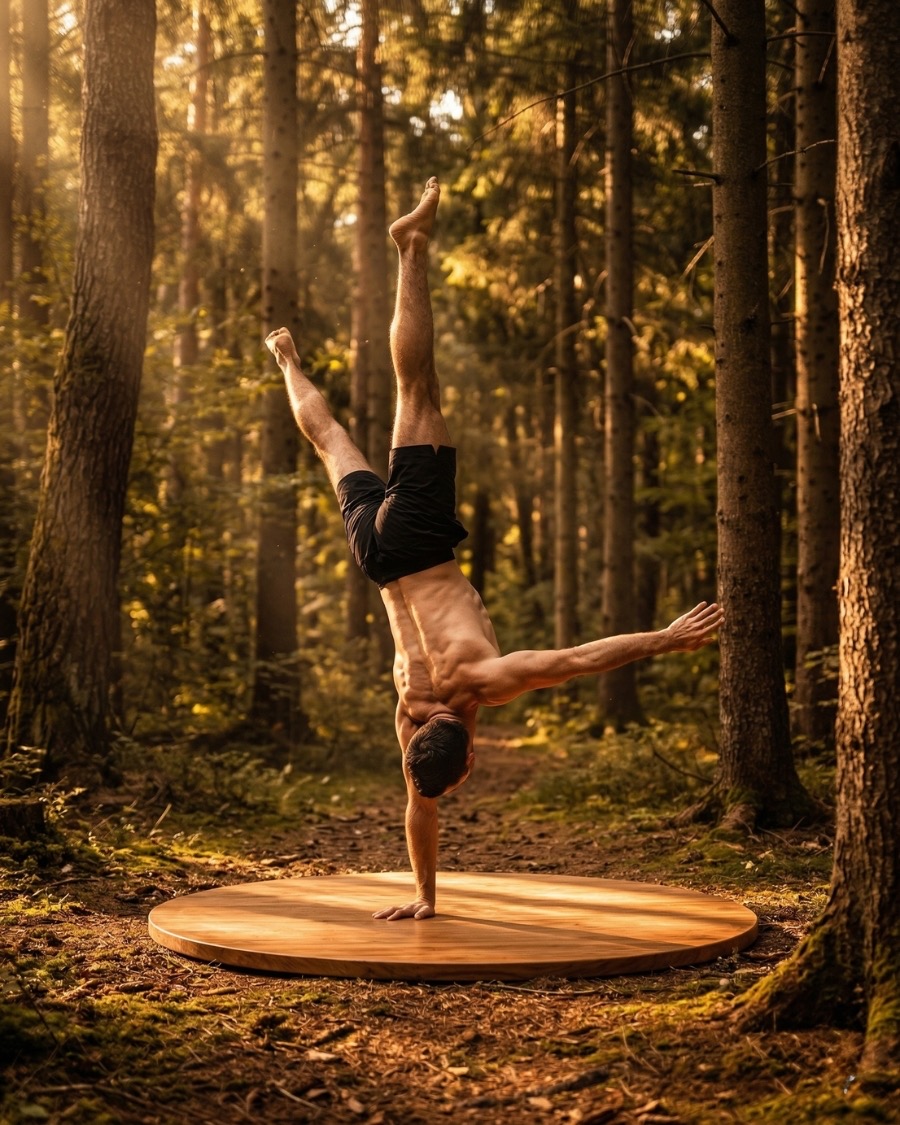
“I watched a hand balancer from Cirque du Soleil perform his act. I couldn't believe my eyes. I watched it again. Then I decided: that's what I want to do.”
I started looking for circus schools. By the time I found them, I was already 24 — a little too old for most programs. But I got lucky. I met Yuval Ayalon, who was already balancing on one arm, and who was generous enough to show me what was possible.
He connected me to his teacher — Claude Victoria, a legendary hand balancing teacher from France. I arrived at Claude's place in eastern France the day before my 25th birthday. I spent that birthday upside down. It was the day that changed my entire life.
The advantage
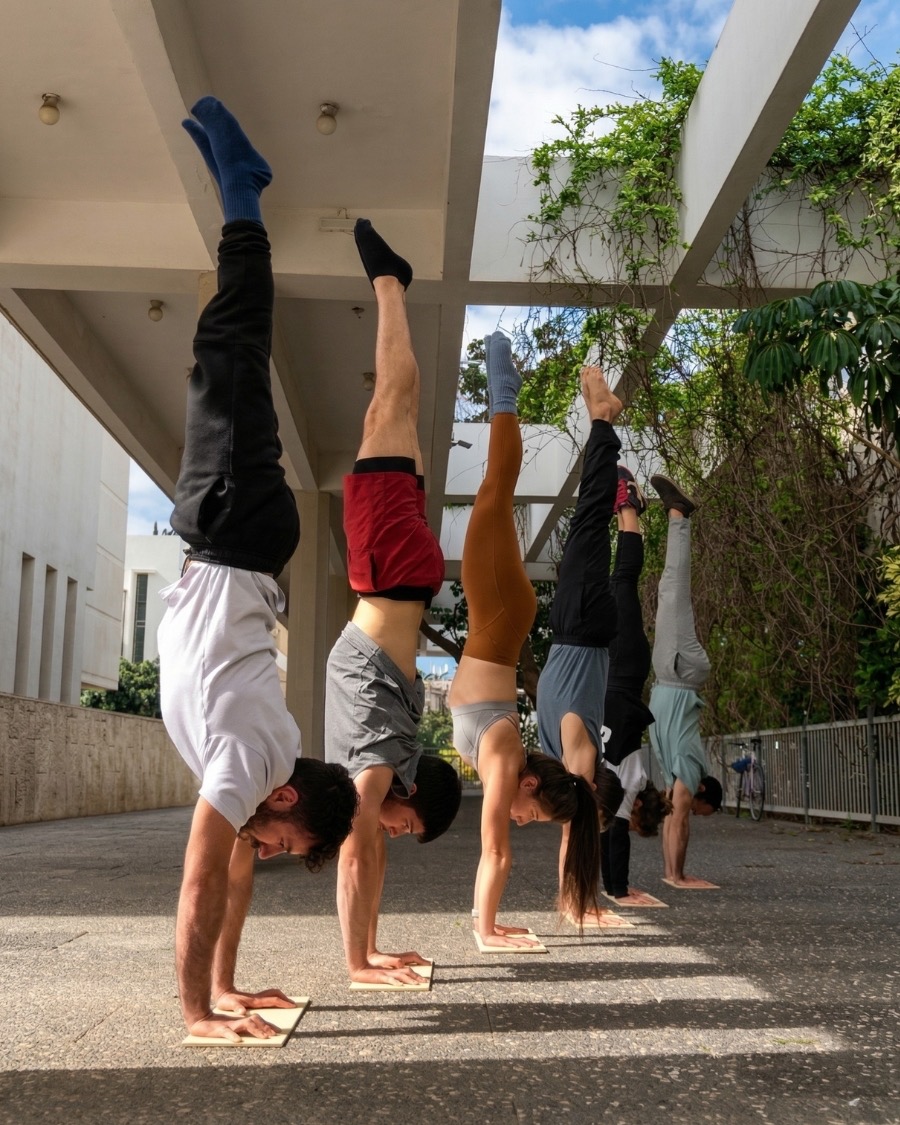
Starting at 25 was the best thing that happened to my teaching.
I had no childhood flexibility to fall back on. No ingrained movement patterns inherited from years of gymnastics training. I had an adult body that had to be taught — not just reminded of something it once knew.
That forced me to go deep. I had to understand how the adult body actually moves — how to build range of motion from scratch, how to create strength and coordination in a body that hadn't been shaped for this from childhood. I had to find a way that works for someone like me. And in doing that, I found a way that works for almost everyone.
What started as a limitation became the foundation of everything I teach. My students are adults. They come with tight shoulders, old injuries, busy minds, and the belief that maybe it's too late. I know exactly where they are. I've been there.
How I teach
Fun is not the opposite
of serious training.
I've been teaching since 2008. Hundreds of students across the world — yogis, calisthenics athletes, circus artists, dancers, movers of every background. And the thing I've learned more than anything: people learn best when they're enjoying themselves.
My approach is rooted in simplicity. I don't use anatomy jargon or cues that require a degree to understand. I take my lead from the dance world — cues that your body grasps immediately, that create a feeling rather than a concept.
I care deeply about energy efficiency. Most people are working too hard — gripping, bracing, forcing. When you learn to do less, something opens up. You relax. You improve faster. People come to me stuck, and leave with a few key things that click — and suddenly, progress that felt impossible starts happening. Some tell me their pain decreased. Others say they enjoy the process more than they ever did. For me, both are the whole point.
Something I didn't expect to find
Upside-down
mindfulness.
Hand balancing has been with me through the hardest parts of my life. I kept coming back to it, and it kept helping. For years I wondered exactly why. Running feels good. Yoga feels good. But this was different.
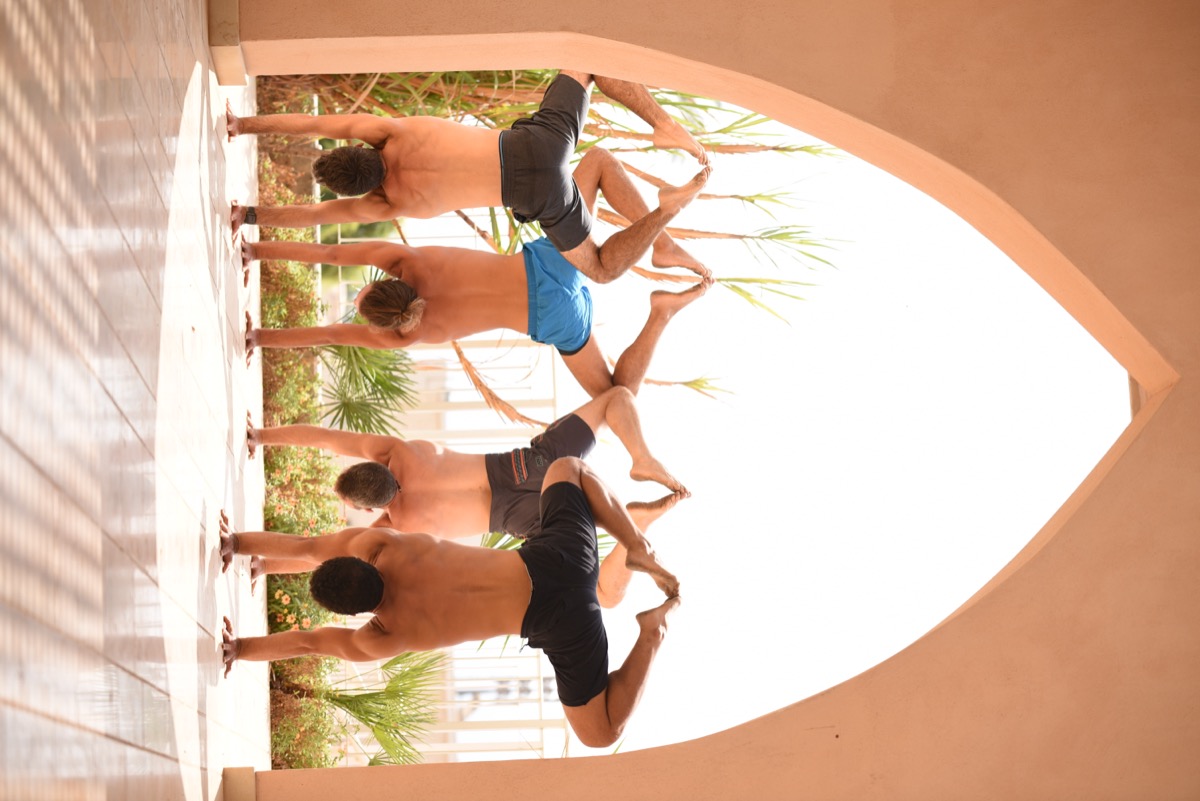
Then it clicked. There is no physical activity that forces you into the present moment quite like a handstand. The moment your mind drifts — the grocery list, the argument from yesterday, whatever — you fall. You can't fake presence. You can't think your way through balance.
The practice demands that you arrive. Fully. Every single session. It is, in the truest sense, a moving meditation — one that doesn't let you cheat.
I've come to think of this as one of the greatest gifts I can give my students. Not just the technique. Not just the strength or the shapes. The practice of showing up completely — of being nowhere else but here, upside down, fully present.
I've always felt how music affects us — and our movement. I bring it into everything I teach.
- 19
- years in hand balancing
- 2008
- started teaching
- 100s
- students worldwide
- 1
- arm (sometimes)
What I believe
Three things I've learned from thousands of hours upside down.
01
Simplicity over information
There's too much out there, and most of it makes people more confused, not less. My cues don't come from anatomy textbooks — they come from intuition, from movement, from watching hundreds of bodies work through the same problem in different ways. The goal is understanding that feels obvious, not academic.
02
Energy efficiency
Most people are working too hard. When you learn to invest exactly the right amount — and not a drop more — something shifts. You get calmer. More present. Your nervous system relaxes, and paradoxically, that's when real progress starts.
03
Fall in love with the process
A handstand isn't a destination. It's a practice. When you genuinely enjoy training — when you're curious instead of frustrated — you show up differently. That's the secret no one talks about. Fall in love with the process, and the skill follows.
Ready?
Come train with me.
Workshops in Israel, retreats abroad, and soon — a whole lot more.