Handstand Training for Adults: Why Starting Late Is Actually an Advantage
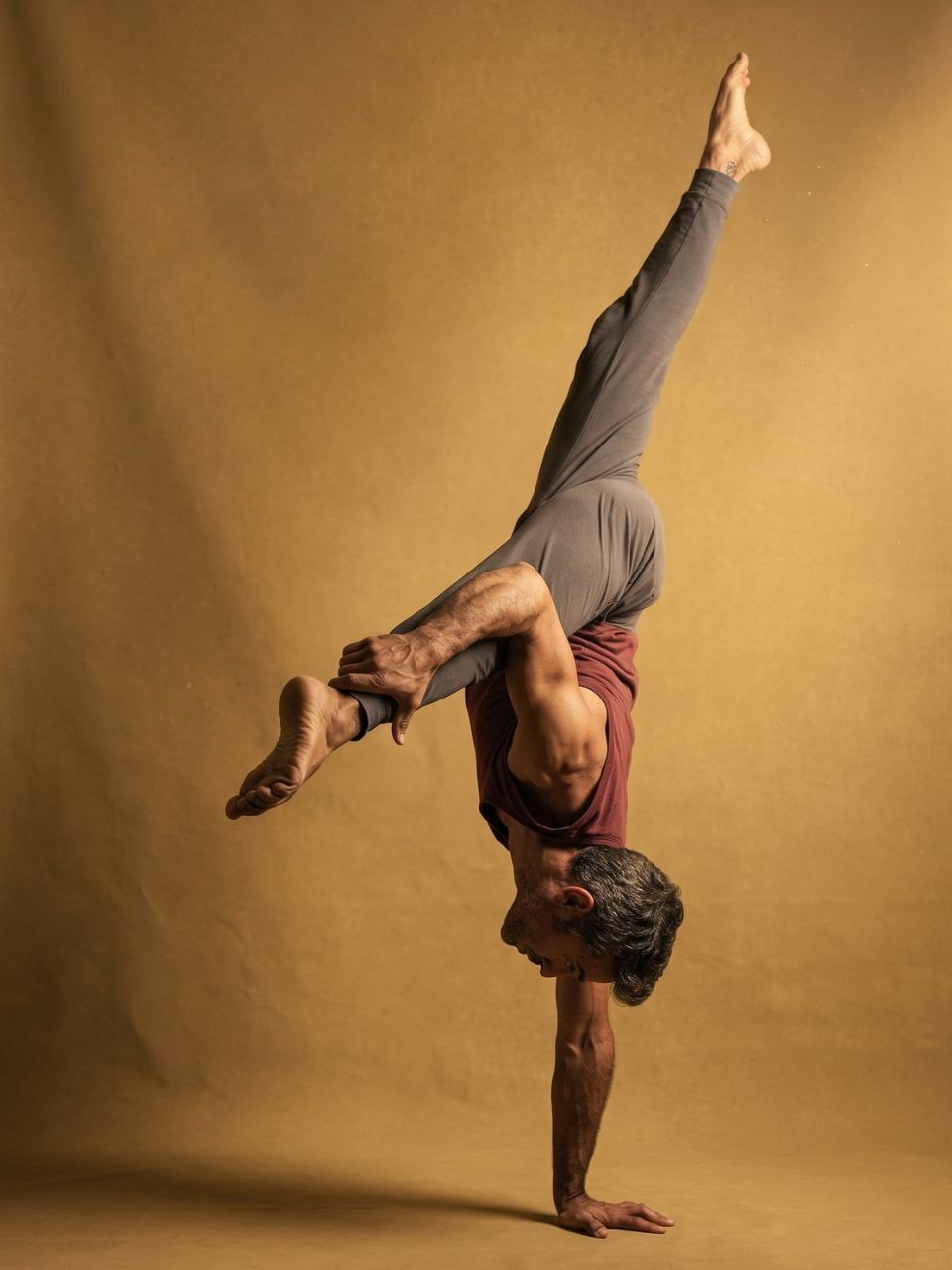
Most people assume they missed their window. They didn't. Here's why adults - with the right approach - can progress faster than they think.
I started training hand balancing seriously at 25. Not as a child prodigy. Not with a gymnastics background. But I wasn't starting from scratch either - I had some aerial, some acrobalance, and was already playing with standing on my hands. What I didn't have was any real structure, or much of an idea of what I was actually doing.
I found my way to Claude Victoria, learned hand balancing properly for the first time, and a few years later started performing professionally. Teaching came after that - and eventually became its own career.
I tell you this not to impress you, but because the belief that stops most adults before they even begin - "I'm too old for this" - is one I've watched quietly destroy more potential than any physical limitation ever could.
The myth of the gymnastics window
It's true that children who train gymnastics from a young age develop certain physical qualities early - a particular kind of body awareness, certain joint adaptations, deep-rooted movement patterns. This is real.
And there's something else that's also true: children are fast learners in a way adults simply aren't. The young brain's capacity to absorb new motor patterns is extraordinary. That does diminish with age - and it would be dishonest to pretend otherwise.
What's not true is that the absence of that background closes the door to handstands.
The handstand is not a gymnastics skill that requires early specialisation. It is a balance skill. And balance, unlike many physical capacities, responds remarkably well to training at any age - provided the training is intelligent and appropriate to an adult body.
What adults actually have going for them
Adults who choose to learn handstands have something children generally don't:
The ability to understand what they're doing. A child learns through repetition and imitation. An adult can understand the mechanics - why the shoulders need to be in a certain position, what the wrist loading should feel like, why the line matters. That understanding accelerates learning significantly when it's paired with good instruction.
Self-awareness. Adults can notice when something feels wrong, identify patterns in their training, and make conscious adjustments. Children feel their way; adults can think and feel simultaneously.
Motivation that comes from choice. Nobody made you learn a handstand. You chose this. That intrinsic motivation - the kind that belongs entirely to you - is fuel that doesn't run out the same way.
Body awareness from other movement practices. Most adults who pursue handstands have already been moving - yoga, strength training, dance, climbing. That foundation of body literacy is more valuable than people realise.
What actually needs to change for adult training
The approach matters more for adults than the potential. An adult body needs different things than a child's body:
More deliberate warm-up and preparation. Wrist health, shoulder mobility, and thoracic extension need specific attention before every session. This isn't a limitation - it's just accurate care for a mature body that deserves it.
Recovery built into the programme. Adults adapt slightly more slowly but also more deeply. Quality over frequency is often the right trade-off.
Progressive loading. The connective tissue - tendons, ligaments - adapts more slowly than muscle. A good programme respects this and builds gradually, which prevents the kind of overuse injuries that sideline people for months.
Understanding over imitation. Adults learn better when they know why. A good teacher explains the principles, not just the exercises.
What a realistic adult progression looks like
Training 3-4 times a week gives your nervous system enough repetition to build the skill. Once a week is rarely enough - the body needs more regular exposure than that to develop balance. Beyond that, the timeline is genuinely hard to predict.
I've seen someone find a solid handstand in 2 days. I've seen others work for 2 years. There are no guarantees - and anyone who tells you otherwise is guessing. What I can say is that consistent, structured practice always moves the needle, for everyone.
The adults I've seen progress fastest share a few traits. They practice consistently rather than intensely. They pay attention rather than just log reps. And they stay genuinely curious about the process rather than fixating only on the outcome.
None of those traits belong only to young people.
The real window
There is a window for learning handstands. It's not childhood.
It's now - whatever now means for you. The body you have today is capable of more than you currently believe. The process of discovering that is one of the most interesting things you can do with your training time.
The best time to start was years ago. The second best time is today.
I've taught students from the age of 20 to above 60 who had never turned upside down in their lives. I've watched them find their first freestanding handstand and cry. Not because it was hard. Because they had assumed it was impossible - and it wasn't.
That assumption is the only real obstacle.
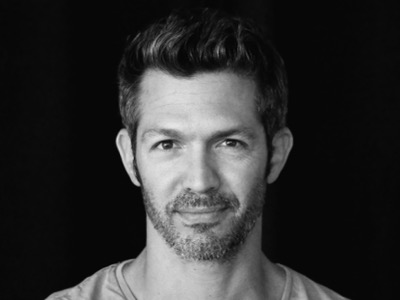
Yuval Oz
Hand balancer and handstand coach. Teaching people to get upside down - and stay there - since 2008.
Stay in the loop
Get new posts and updates
No noise. Just new articles, upcoming workshops, and things worth knowing.