How Long Does It Take to Learn a Handstand?

Everyone wants to know the timeline. The honest answer is: it depends - but not on the things most people think.
Everyone wants a number.
Type "how long to learn a handstand" into Google and you will find answers ranging from 30 days to several years. Both are technically true. Neither is particularly useful.
The honest answer is: most people who train consistently and correctly can hold a freestanding handstand within 6 to 18 months. But what matters far more than the timeline is understanding what actually drives progress - and what quietly stalls it.
The variable nobody talks about: quality of practice
Two people can both train handstands three times a week. One will be balancing in 8 months. The other will still be kicking up against the wall two years later, wondering what they're doing wrong.
The difference is almost never about talent or natural ability. It's about how they practice.
A handstand is a balance skill, not a strength skill - even though it requires strength to perform. Balance is trained through countless micro-corrections, through learning to feel what your body is doing when you can't see it, through developing a relationship with instability rather than fighting it.
If your practice is built around holding as long as possible and waiting not to fall, you are not training balance. You are training tension.
What actually moves the needle
- Consistent exposure. Short, frequent sessions beat long, infrequent ones. Three 20-minute sessions a week will develop you faster than one 90-minute session.
- Shoulder alignment. Most beginners cannot get their shoulders into the right position because they haven't built the specific overhead mobility and strength the handstand demands. This is a prerequisite, not a side project.
- Wrist preparation. Neglect this and your progress will be capped by pain and limitation before it ever gets capped by skill.
- Learning to fall. Counterintuitively, people who are comfortable with falling - who have learned to cartwheel out safely - progress faster. Fear of falling creates tension, and tension kills balance.
- Feedback. Video yourself. Work with a teacher. The handstand is a position you cannot fully see or feel accurately from the inside.
The stages of a handstand journey
Rather than a fixed timeline, think of it as phases. These are rough markers - people who train seriously and more frequently tend to move through them faster:
Phase 1 - Foundation (months 1–3): Building the prerequisite shoulder mobility, wrist strength, and body awareness. Learning to kick up consistently to the wall and begin developing the line.
Phase 2 - Emergence (months 3–9): First freestanding moments appear - brief, unreliable, electrifying. Learning to recognise what balance feels like and beginning to chase that sensation.
Phase 3 - Consolidation (months 6–18): The handstand becomes increasingly available. You can find it most days. You start to understand your own patterns - how tiredness affects it, how breath affects it, how the quality of your warm-up matters.
Phase 4 - Refinement (ongoing): The work deepens. The shape gets cleaner. New variations become possible. This phase does not end.
The thing that speeds everything up
There is one factor that shortens the timeline more than any other: learning to practice with attention rather than just with effort.
The handstand is, among other things, a lesson in presence. You cannot balance while thinking about something else. The moment your mind drifts - the grocery list, the thing you said three days ago - you fall. Every single time.
People who come to understand this early stop white-knuckling their practice and start listening to it. That shift changes everything.
The question is not really how long it takes. The question is what you are willing to learn about yourself along the way.
A realistic expectation
If you train 3–4 times a week with good structure and honest attention: expect your first consistent freestanding holds within 6–12 months. Expect to feel genuinely confident in your handstand within 12–24 months.
If you train less frequently, or without clear guidance on what to fix: the timeline extends, sometimes indefinitely.
The handstand is not a trick. It is a practice. And like all practices, it gives back exactly what you put in - not in quantity, but in quality.
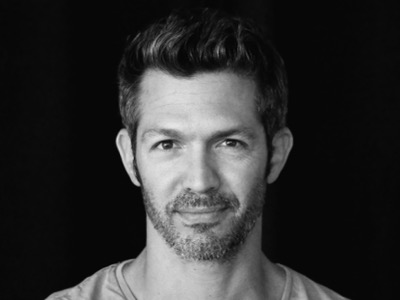
Yuval Oz
Hand balancer and handstand coach. Teaching people to get upside down - and stay there - since 2008.
Stay in the loop
Get new posts and updates
No noise. Just new articles, upcoming workshops, and things worth knowing.